
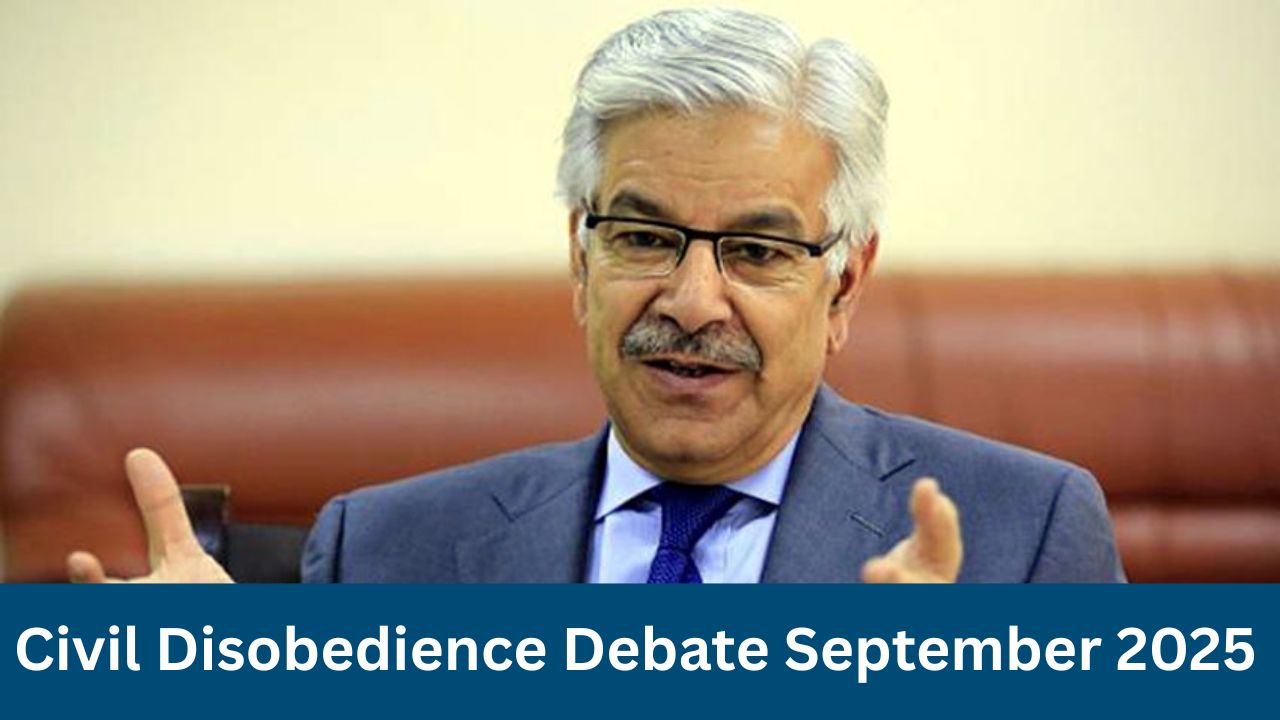
Pakistan’s political landscape is once again heating up. In September 2025, the Chief Minister of Khyber Pakhtunkhwa (KP) openly stated that his government is waiting for the PTI founder’s call to begin a civil disobedience movement. The statement has triggered debates across the country—supporters see it as loyalty, while critics warn of instability.
If you’re confused about what this means, what “civil disobedience” actually involves, and how it could affect ordinary people in KP, this guide will clear your doubts step by step.
Contents
- 1 What Exactly Is Civil Disobedience in Pakistan’s Context?
- 2 KP CM’s Statement – Why Is It So Significant?
- 3 Eligibility Criteria – Who Might Be Affected If Movement Starts?
- 4 Step-by-Step Guide – How Civil Disobedience Usually Works
- 5 Quick Facts Table – Civil Disobedience Debate (September 2025)
- 6 Common Mistakes People Make in Such Movements
- 7 Benefits & Real-Life Impact – Why Some Support It
- 8 Latest Government Announcements
- 9 Pro Tips for Ordinary Citizens
- 10 FAQs – Civil Disobedience Movement 2025
- 11 Conclusion
What Exactly Is Civil Disobedience in Pakistan’s Context?
In simple words, civil disobedience means refusing to follow certain government laws or financial obligations as a form of protest.
- Not paying utility bills.
- Boycotting government taxes.
- Ignoring official orders.
This type of protest was previously seen in Pakistan’s history, especially during PTI’s earlier campaigns. Now, with KP’s CM publicly stating readiness, the possibility of such a movement feels real again.
KP CM’s Statement – Why Is It So Significant?
The CM of Khyber Pakhtunkhwa has declared that his party and provincial government are standing by the PTI founder. He said:
- “We are waiting for the signal.”
- KP’s people are prepared to resist in a peaceful yet strong way.
- Any call from the PTI founder will be followed without delay.
This is significant because civil disobedience is not just a street protest—it directly affects governance, economy, and daily life.
Eligibility Criteria – Who Might Be Affected If Movement Starts?
While it’s not a “program” with benefits, here’s who gets directly impacted:
- Ordinary Citizens: May be asked not to pay bills or taxes.
- Shopkeepers & Traders: Could face pressure to boycott government levies.
- Students & Youth: Often play a big role in demonstrations and awareness campaigns.
- Government Employees in KP: Might face confusion between following state rules vs party directives.
Step-by-Step Guide – How Civil Disobedience Usually Works
If PTI’s founder calls for it, here’s how it may unfold:
- Public Call: PTI founder announces movement via speech or video message.
- Party Directives: KP CM issues province-wide instructions.
- Symbolic Acts: Rallies, slogan chanting, flag marches.
- Refusal to Pay Bills/Taxes: Citizens may be encouraged not to pay electricity, gas, and tax bills.
- Street Protests: Youth wings and workers mobilize for peaceful demonstrations.
- Negotiations or Crackdowns: Federal government may respond with dialogue or legal action.
Quick Facts Table – Civil Disobedience Debate (September 2025)
| Aspect | Details |
| Announced By | KP Chief Minister |
| Triggered By | PTI Founder’s political struggle |
| Expected Action | Refusal to pay bills, peaceful protests |
| Previous Example | PTI’s 2014 Islamabad Dharna |
| Direct Impact On | Utility bills, taxes, trade, governance |
Common Mistakes People Make in Such Movements
- ❌ Believing that skipping bills means they will be forgiven forever (arrears usually pile up).
- ❌ Mixing violent protest with civil disobedience (true form is non-violent).
- ❌ Not keeping records of unpaid bills, which later causes legal issues.
- ❌ Expecting immediate results—such movements often take time.
Benefits & Real-Life Impact – Why Some Support It
Supporters argue that civil disobedience can:
- Put pressure on the federal government.
- Show people’s unity and frustration.
- Force dialogue on key political issues.
Example: In Peshawar, shopkeepers say they are willing to cooperate because “agar hukoomat hamari baat nahi sunti, tou humein apna dukh issi tarah dikhana pare ga.”
Latest Government Announcements
Federal ministers in Islamabad have strongly rejected the idea, warning that any attempt to block bill payments will face strict consequences. They also claim civil disobedience will hurt ordinary citizens more than the rulers.
Meanwhile, KP CM’s camp insists that they will stay peaceful and lawful, only following the PTI founder’s word.
Pro Tips for Ordinary Citizens
- Keep copies of your bills and receipts—even if you join protests.
- Don’t risk violence; civil disobedience is meant to be non-violent.
- Stay updated through official party channels, not fake SMS or WhatsApp forwards.
- If you’re a daily wager or small shopkeeper, calculate the risks before skipping dues.
FAQs – Civil Disobedience Movement 2025
Q1: Will skipping bills cancel my dues permanently?
No, arrears usually stay. If movement ends, you may still need to pay.
Q2: Can government cut off electricity or gas?
Yes, utility companies can disconnect services for non-payment.
Q3: Is civil disobedience illegal?
It’s a grey area. Peaceful protest is legal, but refusing dues may bring penalties.
Q4: Has this happened before in Pakistan?
Yes, in 2014 PTI called for civil disobedience during its sit-in.
Q5: Who decides when it starts?
Only PTI founder’s official call will trigger province-wide action.
Conclusion
The KP Chief Minister’s statement shows complete alignment with the PTI founder. While civil disobedience remains a political tool, its success or failure depends on how citizens respond and how the federal government reacts.
For now, one thing is clear: Khyber Pakhtunkhwa is on standby, waiting for a single call that could change Pakistan’s political temperature overnight.